
10 Amazing Benefits of Stickers for Toddlers – Fun & Educational!

Stickers are an amazing and affordable toy option for toddlers! They are easy to use, come in various shapes and sizes, and provide hours of entertainment. But did you know that stickers offer numerous benefits beyond just keeping little kids busy? In this blog post, we will explore ten fantastic advantages of stickers for toddlers? In this blog post, we will discuss ten benefits of stickers for toddlers.
1. Fine Motor Development
Developing fine motor skills is a must for toddlers, as it lays the foundation for many important tasks in life. Fine motor skills refer to the ability to control and coordinate small muscles in the hands and fingers, which are required for activities such as writing, drawing, using utensils, and buttoning clothes.
Stickers are an excellent tool for fine motor skill development in toddlers, as they require precise hand movements to peel, stick, and move them around. Toddlers need to use their neat pincer grip, which involves using the tips of the thumb and index finger to pick up small objects, to handle stickers. This helps to strengthen the muscles in their little hands and fingers, improving their grip and dexterity.
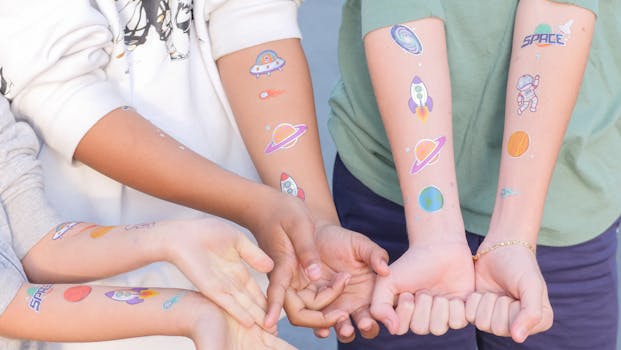
2. Improve Hand-Eye Coordination
Hand-eye coordination is a critical skill that toddlers need to develop. It involves the ability to use their eyes to guide their hands and fingers to complete a task accurately. This skill is essential for many activities that toddlers will encounter as they grow, such as sports, writing, drawing, and many other daily activities.
A sticker sheet can be a fun way to improve a toddler’s visual scanning. This requires the child to use both their eyes and hands simultaneously and learn how to coordinate them.
The variety of shapes, colors, and sizes of stickers can make the activity more challenging, which encourages young children to improve their coordination further. By challenging themselves to stick the smaller and more intricate stickers, toddlers can develop their precision and focus.
Peeling stickers from its backing also requires a precise level of hand-eye coordination, as the child needs to use their fingers to grip the edge of the sticker, apply a steady amount of pressure, and carefully remove the sticker without tearing it.
Improving coordination through sticker playtime is also a great way to help toddlers develop their visual perception, spatial awareness, and depth perception. These are all essential skills that will assist them in everyday life activities such as driving, playing sports, and doing everyday tasks.
3. Encourage Creative Expression
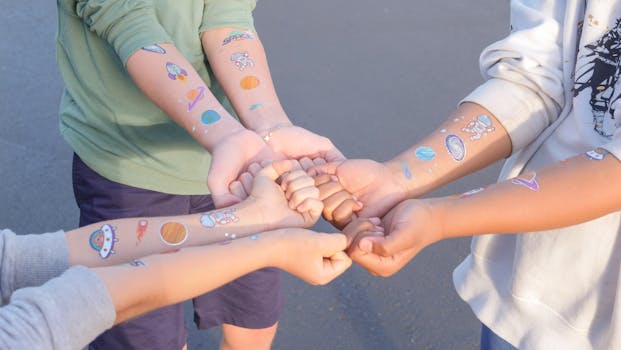
Encouraging creativity is essential for toddlers as it helps to develop their imagination and problem-solving skills. Stickers provide an excellent opportunity for toddlers to express themselves creatively by creating their own unique designs and patterns.
Toddlers can use a sticker sheet to decorate a wide range of surfaces, including paper, cardboard, and even furniture. They can mix and match different colors and shapes to create their own unique designs. This activity allows them to explore their creativity and imagination, making it a fun and engaging way to develop their artistic abilities.
The process of creating something with stickers can be very satisfying for toddlers. It allows them to take ownership of their artwork and feel proud of their creations, which can boost their self-esteem and confidence.
Creating sticker scenes can also be a fun way to encourage storytelling and language development. Toddlers can use stickers to create scenes and characters, and then use their imagination to come up with stories to go along with them.
Using stickers to create collages or decorate cards is an excellent way to develop their problem-solving skills. Toddlers need to figure out how to arrange the stickers in a visually appealing way and make decisions about color combinations and placement.
4. Boost Confidence
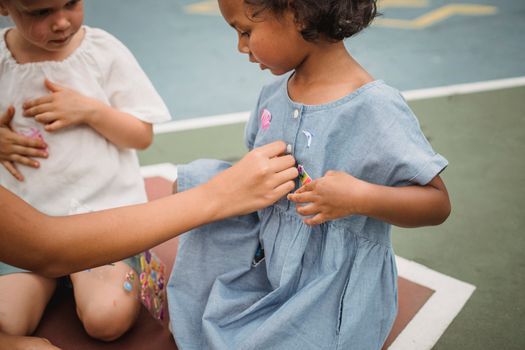
Boosting confidence and self-esteem in toddlers is crucial for their emotional development. Sticker playtime can be a great way to give toddlers a sense of accomplishment, which can help to boost their confidence and self-esteem.
A Sticker sheet is easy for toddlers to use, and they can place them anywhere they want. The fact that they can quickly stick a sticker onto a surface and create a colorful and engaging design gives them a sense of control and achievement.
As they develop their skills and become more adept at using stickers, they can create more complex designs, which can further boost their confidence and self-esteem. This feeling of accomplishment can motivate toddlers to continue exploring their creativity and imagination, leading to further growth and development.
Additionally, sticker playtime can also help toddlers develop their social skills. When children use stickers together, they can collaborate, share ideas, and work as a team, which can help to build their confidence and social skills.
Furthermore, toddlers can use stickers to express themselves and show their individuality, which can also boost their confidence and self-esteem. By allowing them to choose their favorite stickers and decorate their belongings, parents can encourage toddlers to take pride in their belongings and feel confident in their personal style.

5. Develop Language Skills
Sticker playtime can be a great way for toddlers to develop their language skills and expand their vocabulary. Stickers can be used as a fun and engaging tool to teach toddlers new words and concepts.
Parents can use stickers to introduce their toddlers to the names of different objects, animals, and colors. For example, parents can place stickers of animals on a piece of paper and teach their toddler the name of each animal. Toddlers can also learn about colors by using stickers of different colors and sorting them into groups.
Sticker playtime can help toddlers develop their communication skills. Parents can encourage their toddlers to describe the stickers they are using, their colors, and their shapes. This can help them develop their vocabulary and express themselves more clearly.
Sticker playtime can also be used as a fun and engaging way to develop toddlers’ storytelling skills. Parents can encourage their toddlers to create stories and describe the scenes they have created using stickers. This can help them develop their imagination and creativity while also developing their language skills.
Furthermore, sticker playtime can be a great way to introduce toddlers to new concepts such as shapes, numbers, and letters. Parents can use stickers that represent different shapes, numbers, and letters, and teach their toddlers how to recognize them. This can help them prepare for their academic journey and develop a love for learning.
The form you have selected does not exist.
6. Teach Organizational Skills
Sticker playtime can be a great way for parents to teach their toddlers about organization and categorization. Stickers can be used as a fun and engaging tool to help toddlers develop their organizational skills.
Parents can provide toddlers with stickers of different shapes, colors, and designs. Then ask them to sort them into groups based on their characteristics. This can help toddlers learn how to categorize objects and understand the concept of organization.
Parents can use stickers to teach toddlers about sequencing and ordering. Parents can provide toddlers with stickers that represent different objects or animals. Then ask them to place them in order from smallest to largest or from the beginning to the end of a story. This can help toddlers develop their critical thinking and problem-solving skills.
Parents can use stickers to teach their toddlers about the concept of ownership and taking responsibility for their belongings. By using stickers to label their belongings, toddlers can learn how to organize and take care of their things. This can also help them develop a sense of responsibility and independence.
In addition to teaching organizational skills, sticker playtime can also be a fun way for toddlers to develop their creativity and imagination. By using stickers to create unique designs and patterns, toddlers can explore their artistic abilities and develop their fine motor skills.
7. Encourage Independent Play
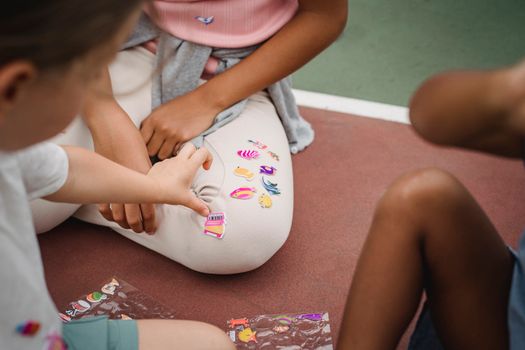
By giving toddlers a sticker sheet and paper, parents can encourage them to engage in independent play and give themselves a much-needed break.
Stickers are easy to use and can be placed anywhere, which makes them a great toy for toddlers to play with independently. Parents can provide toddlers with a variety of stickers and paper, and encourage them to create their own unique designs and patterns.
This can help toddlers develop their creativity and imagination while also giving them a sense of control over their playtime.
Independent play with stickers can help toddlers develop their fine motor skills, hand-eye coordination, and concentration. By focusing on peeling stickers and placing stickers on paper, toddlers can improve their hand-eye coordination and concentration while also developing their fine motor skills.
Independent play with stickers can help toddlers develop their problem-solving and critical thinking skills. By exploring different shapes and designs, toddlers can develop their ability to recognize patterns and solve problems independently.
8. Promote Positive Behavior
Stickers can be an effective tool for promoting positive behavior in toddlers. By using stickers as a reward for positive behavior, parents can reinforce good habits and encourage their children to continue making positive choices.
One way to use stickers to promote positive behavior is by creating a sticker chart. Parents can create a chart with specific behaviors or tasks they want their child to work on, such as using the potty, cleaning up their toys, or completing homework.
Every time the child successfully completes the task or behavior, they can earn a sticker to place on the chart. Once the chart is filled up with stickers, the child can earn a reward, such as a toy or a special treat.
Using stickers as a reward can also help to reinforce positive behavior in a more immediate way. For example, if a toddler is having trouble staying seated during mealtime, parents can offer a sticker for every 10 minutes that the child remains seated. This can provide a visual reminder for the child of their progress and encourage them to continue making positive choices.
Additionally, stickers can be used to reinforce positive social behaviors, such as sharing and kindness. For example, parents can give their child a sticker every time they share a toy with a sibling or friend, or when they say something kind to someone. This can help to promote positive social interactions and reinforce good habits.
Using stickers as a reward for positive behavior can also help to reduce negative behavior. When a child knows that they can earn a sticker for making positive choices, they may be more motivated to behave well and less likely to engage in negative behaviors such as tantrums or hitting.
9. Improve Attention Span
Improving attention span is an important developmental milestone for toddlers, as it is essential for academic success and overall well-being. Stickers can be a great tool for improving attention span in toddlers because they provide a fun and engaging activity that requires focus and concentration.
When toddlers are playing with stickers, they need to concentrate on choosing the right sticker, peeling stickers off a sheet, and placing it in the correct spot. This requires sustained attention and focus, which can help to improve their attention span over time.
Additionally, stickers can provide a sense of accomplishment and satisfaction when the task is completed, which can help to motivate children to continue focusing and engaging with the activity.
Parents can also use stickers to create activities that are specifically designed to improve attention span. For example, parents can create a sticker scene with a blank background and a variety of stickers, and ask their child to place the stickers in the scene in a specific order or pattern. This requires sustained attention and focus, as well as problem-solving skills, which can help to improve attention span over time.
10. Provide Stress Relief
Stress and anxiety are not uncommon in toddlers. Finding effective ways to relieve stress and anxiety can be challenging for parents. Stickers can be an excellent tool for providing stress relief to toddlers, as they offer a simple and fun activity that can help distract and calm your child.
Stickers can provide a sense of control and accomplishment to children, which can be particularly helpful when they are feeling stressed or overwhelmed. When children are able to choose which stickers to use and where to place them, they can feel a sense of control and autonomy over the activity. Additionally, completing the sticker activity can give them a sense of accomplishment, which can boost their confidence and self-esteem.
Sticker activities can also be a calming and relaxing activity for children. The repetitive and predictable nature of the activity can be soothing and comforting, which can help to reduce stress and anxiety. Sticker activities can be a way for children to express themselves creatively and artistically, which can be therapeutic and cathartic.
Parents can also use stickers as a tool for teaching children relaxation and mindfulness techniques. For example, parents can create a sticker activity where the child is asked to focus on the act of peeling and placing stickers, while taking slow, deep breaths. This can help to calm the child’s mind and body, and teach them valuable relaxation techniques that they can use in the future.
Benefits Of Stickers For Toddlers FAQ
How do stickers help children?
There are a range of benefits of stickers for toddlers. They can enhance fine motor skills and hand-eye coordination as children peel stickers, place them accurately, and manipulate them.
Stickers also encourage creativity and self-expression, as children can use them to create unique designs and patterns. They can also support language development by introducing children to new words and concepts.
Stickers can be used as a tool for teaching organizational skills, promoting positive behavior, improving attention span, and providing stress relief.
Additionally, stickers can boost children’s confidence and self-esteem when they engage in sticker play and feel a sense of accomplishment.
What do children learn from peeling stickers?
Peeling stickers helps children develop their fine motor skills, as they practice precise hand movements and finger control.
It improves their neat pincer grip, which involves using the thumb and index finger to pick up small objects. This action strengthens the muscles in their hands and fingers, enhancing their grip and dexterity.
Peeling stickers also requires hand-eye coordination, as children need to visually guide their hand movements to remove the stickers successfully. It teaches them the skill of applying the right amount of pressure and handling delicate items.
What is the purpose of stickers?
The purpose of stickers varies depending on the context. In general, stickers are used as a form of entertainment and play for children. They offer a fun and engaging activity that stimulates their creativity and imagination.
Stickers can be used for decoration, such as decorating cards, crafts, or personal belongings. They can also serve educational purposes, helping children learn about shapes, colors, numbers, letters, and various concepts.
Stickers are often used as rewards or incentives to promote positive behavior and motivate children. Overall, stickers serve as a versatile tool that supports children’s development and provides enjoyment.
Do stickers help fine motor skills?
Yes, stickers are an effective tool for developing fine motor skills in children. Fine motor skills involve the coordination and control of small muscles, particularly in the hands and fingers.
When children peel stickers, place them accurately, and manipulate them, they engage in activities that require precise hand movements.
These actions strengthen the muscles in their hands and fingers, improving their grip, control, and dexterity. Through sticker play, children develop their fine motor skills, which are essential for tasks such as writing, drawing, using utensils, and buttoning clothes.
Conclusion
In conclusion, stickers are not just a fun toy for toddlers, but they offer a wide range of benefits that can help to develop their fine motor skills, hand-eye coordination, creativity, confidence, language skills, organizational skills, and more. So, the next time you are looking for a simple and affordable toy for your little one, consider getting a pack of stickers and watch as they discover the many benefits of stickers for toddlers.


